
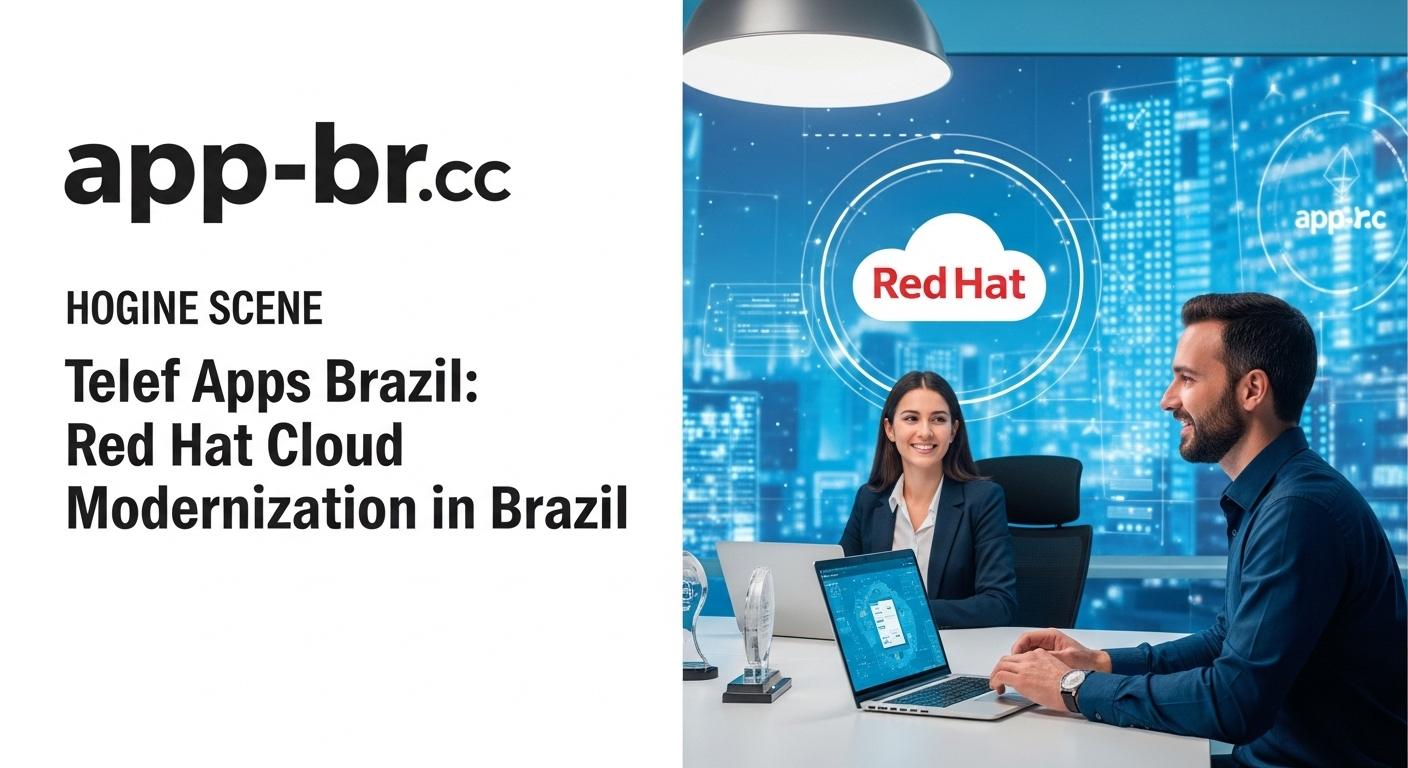
Across Brazil, telef Apps Brazil signals a shift as Telefônica Brasil upgrades its IT cloud infrastructure using Red Hat OpenShift. This move is not just about technology; it reframes how a leading telco can support a diverse set of consumer and enterprise apps in a market where speed, reliability, and data governance matter more than ever.
Industry Context and Brazil’s App Market
Brazil’s digital economy has shown resilient growth, powered by mobile adoption, fintech expansion, and a rising class of developers who rely on cloud-native tools. As government data rules tighten and consumers demand seamless experiences, there is a clear incentive for incumbents like Telefônica Brasil to restructure IT backbones around scalable platforms. The term telef Apps Brazil has emerged to describe a landscape where telecoms, app makers, and service platforms co-create experiences across urban centers and underserved regions alike.
Cloud Modernization with Red Hat OpenShift
OpenShift provides a managed Kubernetes layer with integrated security, developer tooling, and a consistent deployment model across public and private clouds. For Telefônica Brasil, migrating critical workloads to OpenShift can reduce provisioning time, improve reliability, and support a microservices approach necessary for 5G-enabled apps. The shift aligns with Brazil’s push for digital sovereignty and for providers to demonstrate contemporary privacy controls under LGPD.
Operational Impacts and Risks
Operationally, cloud modernization can unlock faster delivery, better observability, and centralized policy enforcement. Yet it also introduces complexities: migration deadlocks, skills gaps among local teams, and reliance on Red Hat’s ecosystem. In Brazil, where talent competition is intense and data localization is a policy theme, the cost of retraining engineers and maintaining multi-cloud tools must be weighed against the gains in agility. Another risk is vendor lock-in: while OpenShift reduces some rigidity, a deep integration with Red Hat tooling can shape product roadmaps and partner ecosystems.
Future Scenarios for telef Apps Brazil
Looking ahead, Telefônica Brasil could use its cloud modernization as a platform to support a broader array of consumer and enterprise apps—ranging from fintech onboarding to smart-city services. If the OpenShift foundation nourishes robust CI/CD, a marketplace of internal APIs and data services could emerge, enabling third-party developers to build on the telco’s infrastructure. This trajectory would ripple through Brazil’s app economy by lowering entry barriers for smaller developers, improving latency for regional users, and encouraging more compliant data sharing within LGPD boundaries.
Actionable Takeaways
- Align cloud initiatives with measurable business outcomes, such as time-to-market for new apps and reductions in mean time to recovery.
- Adopt a disciplined multi-cloud and vendor governance approach to avoid lock-in and ensure data sovereignty.
- Invest in local DevSecOps talent and partnerships to sustain ongoing modernization and security compliance.
- Prioritize LGPD-compliant data architecture and robust identity management to protect consumer data across apps.
- Run controlled pilot projects to validate performance, cost, and user experience before broad scaling.
Source Context
From an editorial perspective, separate confirmed facts from early speculation and revisit assumptions as new verified information appears.
Track official statements, compare independent outlets, and focus on what is confirmed versus what remains under investigation.
For practical decisions, evaluate near-term risk, likely scenarios, and timing before reacting to fast-moving headlines.
Use source quality checks: publication reputation, named attribution, publication time, and consistency across multiple reports.
Cross-check key numbers, proper names, and dates before drawing conclusions; early reporting can shift as agencies, teams, or companies release fuller context.
When claims rely on anonymous sourcing, treat them as provisional signals and wait for corroboration from official records or multiple independent outlets.
Policy, legal, and market implications often unfold in phases; a disciplined timeline view helps avoid overreacting to one headline or social snippet.
Local audience impact should be mapped by sector, region, and household effect so readers can connect macro developments to concrete daily decisions.
Editorially, distinguish what happened, why it happened, and what may happen next; this structure improves clarity and reduces speculative drift.
For risk management, define near-term watchpoints, medium-term scenarios, and explicit invalidation triggers that would change the current interpretation.









Leave a Reply